

Search Website
Water Conservation
 At Western University, we recognize the importance of clean, fresh water to individuals, our community, and the environment. We are committed to conserving water efficiently and seeking innovative ways to manage consumption.
Western University's wastewater is directed via our sanitary sewer to the Greenway Wastewater Treatment plant, which is the City of London's largest treatment facility and treats over 60% of the city's wastewater.
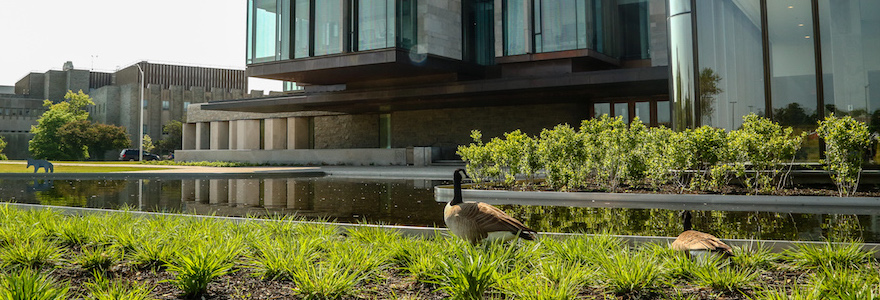
Low impact development (LID) systems are also being implemented to reduce stormwater runoff and increase infiltration of water into the ground during heavy rains or snow melts. At Western, there are two rain gardens, located in front of the Physics and Astronomy Building and the Music Building. The gardens are designed to help handle runoff during storms, and naturally filter salt and other debris from stormwater as it's absorbed into the ground. The gardens also help support biodiversity with native plants, and improved pedestrian experiences with walking paths to enjoy the gardens and nature that visits.
Water Efficiency Upgrades
Western's Power Plant uses a reverse osmosis (RO) to treat water used in the steam boilers to improve the efficiency and longevity of the boilers. In 2017, the water treatment process was updated to reclaim the RO reject water to be reused in blowdown tanks, chilled water make-up, and other auxiliary services. The Power Plant also recovers condensate water from the steam heating network so it can be reused in the boilers with minimal additional water treatment.
Landscape Services continues to reduce the number of high-water requirement plantings. The team has decommissioned many irrigation systems in mature landscaped areas where native species have become established.
Facilities Management has increased the number of bottle filling stations on campus which both reduces the reliance on single-use plastics and promotes personal hydration. There are over 200 refill stations with more being added through renovation and new construction.