Search Website
Spaces that Connect Us
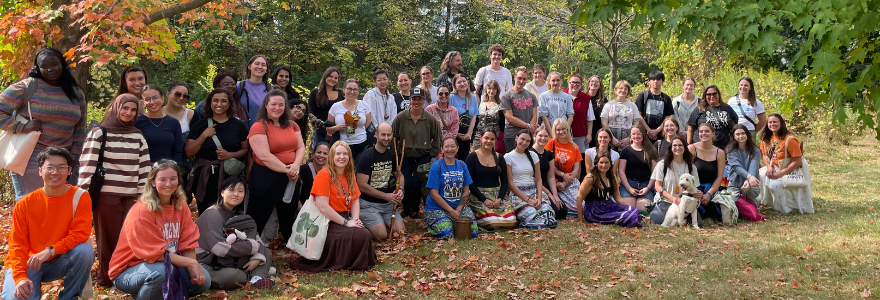
Western’s natural heritage is a defining feature of campus and an important contributor to a healthy and connected community. The Thames River corridor, woodlands, green spaces, and campus landscapes provide opportunities for recreation, reflection, learning, and social connection, fostering a strong sense of place and belonging. By enhancing and connecting these natural areas, Western can create welcoming and accessible outdoor spaces that support well-being, celebrate biodiversity, and encourage meaningful engagement with the environment.
Thames River (Deshkan Ziibi) & Medway Creek
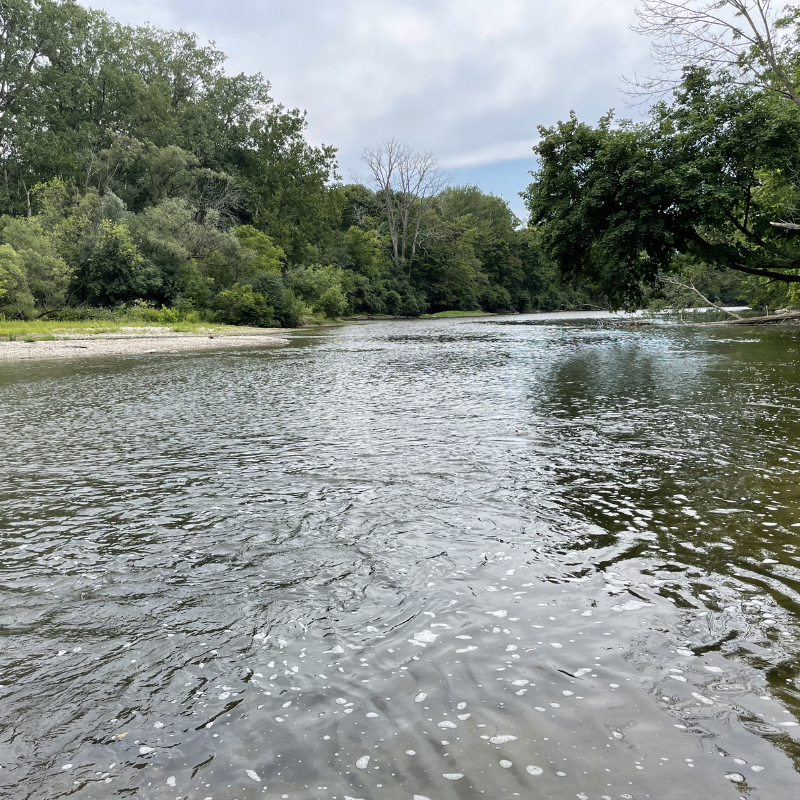
The Thames River or Deshkan Ziibi in Anishinaabemowin (which translates to Antler River) and Medway Creek both flow through Western's campus, intersecting behind the Visual Arts Centre. These bodies of water are home to many species of plants and wildlife, including species at risk such as spiny softshell turtles.
The river watershed extends beyond campus boundaries, connecting three local First Nations communities: Munsee-Delaware Nation, Oneida Nation of the Thames, and Chippewas of the Thames First Nation. For generations, the river has been a vital and living connection among these communities, holding deep cultural, historical, and environmental significance.
Western’s commitment to connecting people with the river and creek is reflected through programming initiatives like Riverfest. Since 2022, this annual initiative focuses on campus-wide events designed to reconnect students, staff, and faculty with the river by creating opportunities to learn, reflect, and engage directly with the waterways that run through campus.
Learn more about Riverfest and other ways to connect with nature.
Live Stake Plantings
As part of the Campus as a Living Lab project Live Stake Planting for Climate Resiliency, native shrubs and perennials were planted along Medway Creek behind Westminster Hall to support ecological restoration, reduce flood risks, and strengthen connections within the watershed community. Installed in April 2023, this project uses a bioengineering technique known as live stake planting, where approximately 75 native tree cuttings were placed along the creek bank to stabilize the shoreline, improve habitat, and enhance the overall health of the river ecosystem. More than 200 native shrubs and perennials were also planted to further support biodiversity and resilience in the area.
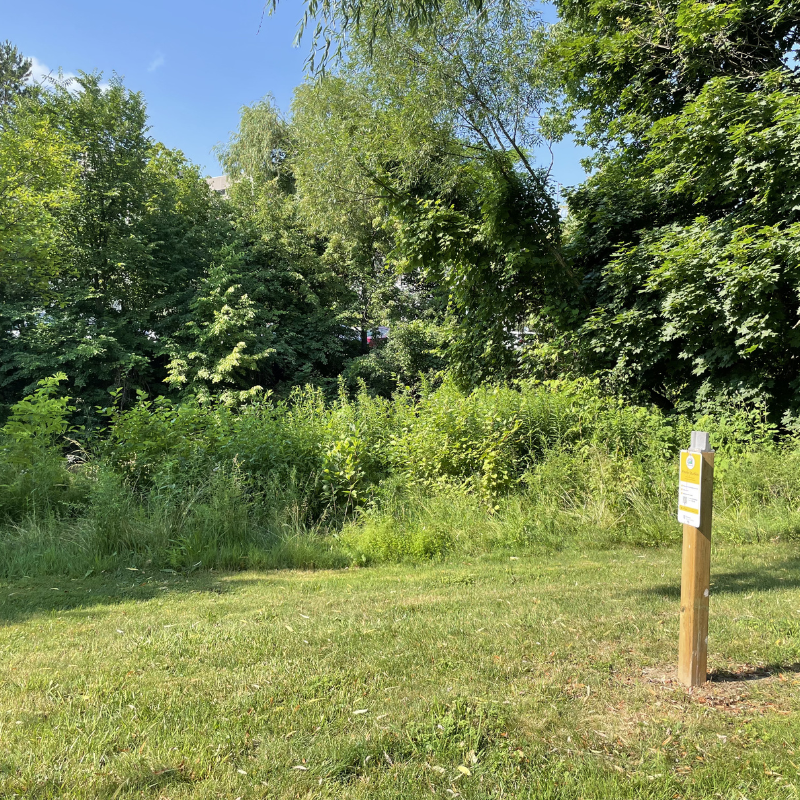
As part of ongoing efforts to document restoration in action, an interactive Chronolog timelapse photo station has been installed at the site. This station captures the landscape’s transformation over time, offering a visual record of growth and change.
Visitors are invited to explore the progress so far and contribute by adding their own photos to the timelapse, helping to track how this ecosystem evolves.
Medway Valley Heritage Forest
Environmentally Significant Area (ESA)
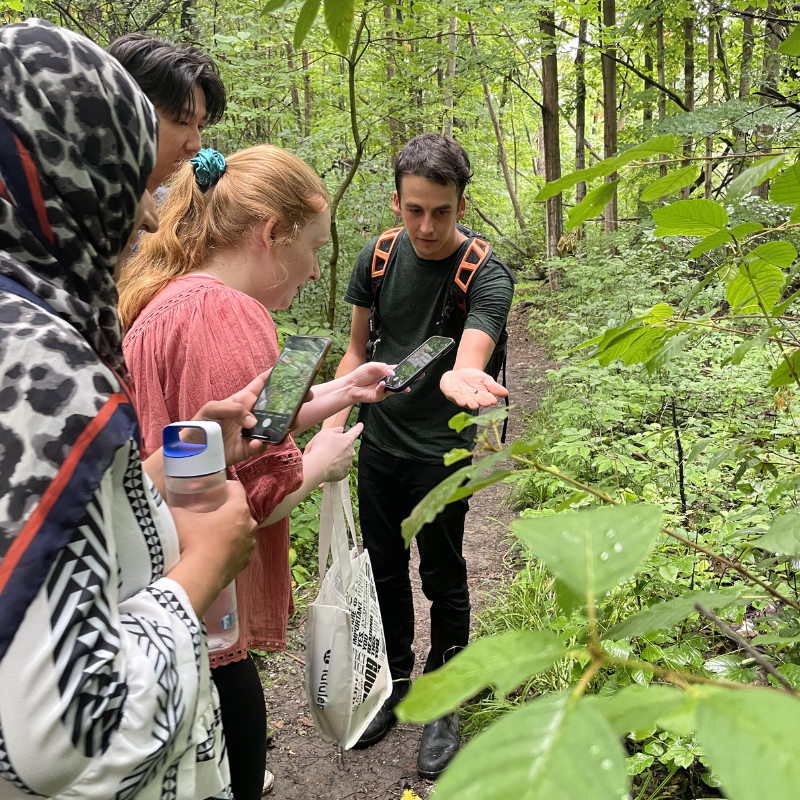
The Medway Valley Heritage Forest Environmentally Significant Area (ESA) spans over 130 hectares of scenic valley lands along Medway Creek. This natural area features diverse habitats including forests, wetlands, and steep valley slopes, supporting a wide range of plant and animal life.
This is a beautiful space to connect and immerse yourself in nature. Visitors can explore more than 12 km of trails winding through the landscape, with access points on campus, near the Support Services Building and West Campus.
To deepen your experience, consider downloading apps like iNaturalist or Merlin Bird ID, which help identify plants, birds, and other wildlife you encounter along the way. These tools can turn a simple walk into an opportunity for discovery and learning, while also allowing you to contribute valuable observations to Western’s growing Biodiversity Inventory and broader citizen science efforts.
Old Growth Forest
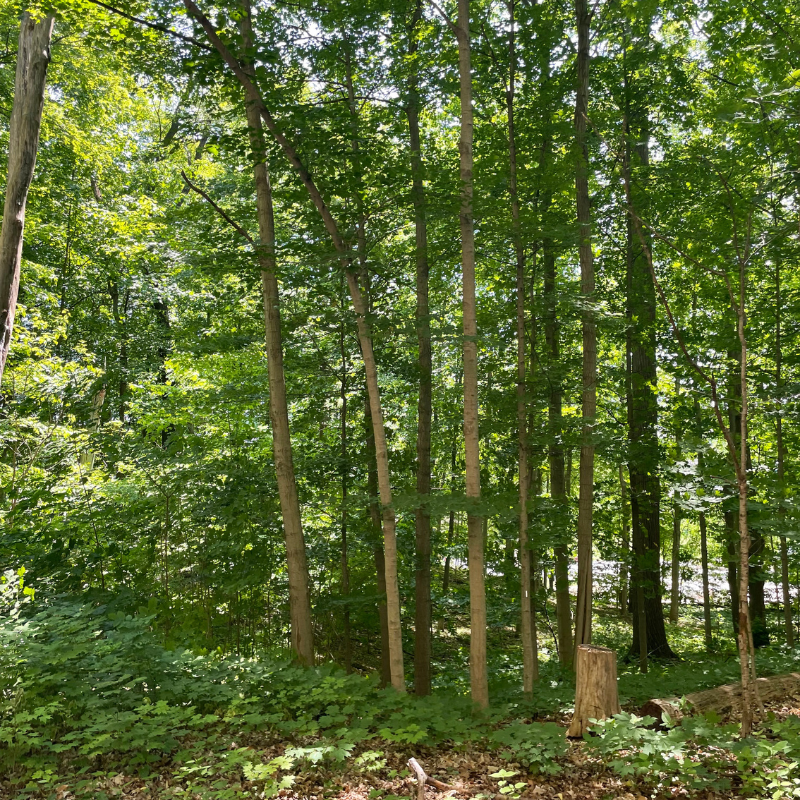
Located between the International & Graduate Affairs Building and the Music Building, this forest patch is a significant ecological feature on campus. Despite its relatively small size and surrounding urban context, it exhibits key characteristics of an old-growth forest, including a layered canopy structure and diverse ground cover. These features support a rich habitat and contribute to the overall ecological resilience and biodiversity of the campus landscape.
Western’s Landscape Services plays an active role in enhancing these natural areas through intentional management practices. Invasive species are not introduced in campus plantings, and existing invasives, such as buckthorn and non-native honeysuckle, are regularly and strategically removed, particularly within and around this forest patch.